Digital Twins in IT Infrastructure: Modelling Workloads, Failures and Operational Costs
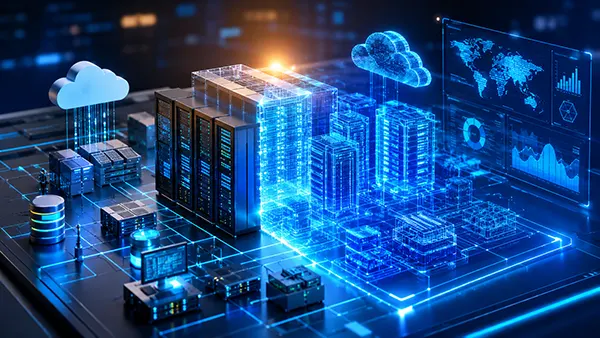
Digital twin technology has moved far beyond manufacturing and industrial engineering. In 2026, IT teams increasingly use digital twins to reproduce servers, cloud environments, data centres and network architecture inside virtual simulation environments. This approach allows engineers to test infrastructure behaviour under heavy traffic, estimate operating expenses, analyse weak points and predict service interruptions before they affect production systems. Businesses that rely on cloud computing, AI processing, distributed applications and hybrid infrastructure now treat digital twins as part of long-term operational planning rather than experimental technology.
How Digital Twins Are Used in Modern IT Infrastructure
A digital twin in IT infrastructure is a virtual representation of physical or cloud-based systems that continuously receives operational data from real environments. These models include hardware specifications, virtual machines, storage systems, API traffic, energy consumption and application performance metrics. Unlike static monitoring dashboards, a digital twin can reproduce behaviour under changing conditions and simulate future scenarios based on historical and real-time telemetry.
Large enterprises increasingly integrate digital twins with observability tools such as Datadog, Grafana, Dynatrace and Splunk. These integrations help engineers create detailed operational maps of cloud clusters, Kubernetes environments and edge computing networks. By synchronising infrastructure data streams with machine learning models, companies can forecast capacity requirements and detect performance anomalies much earlier than traditional monitoring systems allow.
One of the main reasons for adoption is cost optimisation. Cloud spending continues to rise in 2026 due to AI workloads, GPU-intensive applications and high-volume data processing. Digital twins help organisations compare infrastructure scaling strategies before deploying them in production. Teams can analyse how additional servers, traffic balancing or database replication will affect operational expenses without risking live environments.
Real-Time Simulation for Workload Forecasting
Workload simulation has become one of the strongest use cases for digital twins in IT operations. Businesses that experience fluctuating traffic volumes can model infrastructure behaviour during product launches, seasonal spikes or unexpected viral growth. Instead of reacting to outages after they happen, engineering teams can test scaling policies and balancing mechanisms in advance.
Streaming services, fintech companies and e-commerce businesses rely heavily on these simulations because even short performance degradation may lead to financial losses. Digital twins reproduce user activity patterns, API requests, memory usage and network throughput to identify bottlenecks. Engineers can determine whether the infrastructure will remain stable under millions of concurrent sessions or whether additional optimisation is required.
Another important benefit is cloud resource allocation. Many organisations overprovision servers to avoid downtime, which increases operational costs. Digital twins provide more accurate capacity planning by showing exactly how workloads affect CPU consumption, storage access and network latency. This reduces unnecessary infrastructure spending while maintaining stable performance levels.
Using Digital Twins to Analyse Failures and Security Risks
Failure modelling has become a central component of infrastructure resilience strategies. Digital twins allow organisations to reproduce hardware breakdowns, cloud region outages, database corruption scenarios and network failures without affecting live operations. These simulations help technical teams evaluate how systems react during incidents and whether failover mechanisms work correctly.
Cybersecurity departments also use digital twins to model attack scenarios. In 2026, ransomware attacks, API abuse and AI-assisted intrusion techniques continue to increase in complexity. Security specialists can simulate malicious activity inside virtual copies of infrastructure to evaluate response speed, firewall effectiveness and lateral movement detection. This creates safer testing conditions compared to experimenting directly in production environments.
Hybrid and multi-cloud infrastructure adds another layer of complexity. Many enterprises now distribute workloads across AWS, Microsoft Azure and Google Cloud simultaneously. Digital twins help engineers analyse dependency chains between providers and identify points of failure that could affect business continuity. This is especially important for sectors such as healthcare, finance and logistics where downtime directly impacts critical operations.
Predictive Maintenance and Incident Prevention
Predictive maintenance has become increasingly data-driven due to the combination of AI analytics and digital twin modelling. Instead of replacing hardware according to fixed schedules, organisations can evaluate the actual condition of servers, storage devices and networking equipment. Sensors and monitoring agents continuously provide data that helps identify abnormal behaviour patterns before failures occur.
Cooling systems and power distribution units inside modern data centres are also monitored through digital twins. Rising energy prices across Europe and North America have forced operators to improve infrastructure efficiency. Virtual simulations make it possible to identify overheating zones, inefficient rack placement and excessive power consumption without interrupting active workloads.
Incident response training is another growing area. IT departments increasingly conduct simulation exercises using digital twins to prepare for outages and cyberattacks. Engineers can practise disaster recovery procedures, rollback strategies and traffic rerouting inside controlled virtual environments. This improves operational readiness and reduces recovery times during real incidents.

Financial Planning and Long-Term Infrastructure Optimisation
Infrastructure spending has become harder to predict because organisations now operate across multiple cloud providers, edge locations and AI processing environments. Digital twins help finance and engineering departments build more accurate cost projections by modelling future infrastructure expansion under different business conditions. This improves budget planning and reduces unexpected operational expenses.
AI adoption has significantly increased demand for specialised hardware such as GPUs, high-speed networking and advanced storage systems. These technologies are expensive to maintain and consume large amounts of electricity. Digital twins allow organisations to calculate how hardware upgrades, regional deployments or workload migrations will affect long-term costs before investment decisions are made.
Sustainability reporting has also become an important factor. Many enterprises now track carbon emissions associated with cloud computing and data centre operations. Digital twins help estimate energy consumption under different workload conditions and identify opportunities to improve efficiency. This supports environmental reporting requirements and helps organisations align infrastructure planning with sustainability objectives.
Challenges and Limitations of Digital Twin Adoption
Despite the advantages, implementing digital twins in IT infrastructure remains technically demanding. Accurate modelling requires high-quality telemetry, stable integrations and continuous data synchronisation across multiple systems. Inconsistent monitoring data can reduce simulation accuracy and lead to unreliable predictions.
Another challenge is computational overhead. Large-scale digital twins require substantial processing power to simulate complex infrastructure environments in real time. Organisations often need additional cloud resources, AI analytics tools and advanced observability systems to maintain reliable models. This increases implementation costs during the early adoption stage.
There are also concerns related to security and data governance. Digital twins frequently contain detailed operational information about infrastructure architecture, network dependencies and internal processes. If these environments are not properly protected, they may become attractive targets for cybercriminals. For this reason, companies increasingly isolate digital twin environments, apply strict access control policies and encrypt operational telemetry used for simulations.