Energy Cost of AI Infrastructure: Environmental Impact of Large Models and Paths to Optimisation
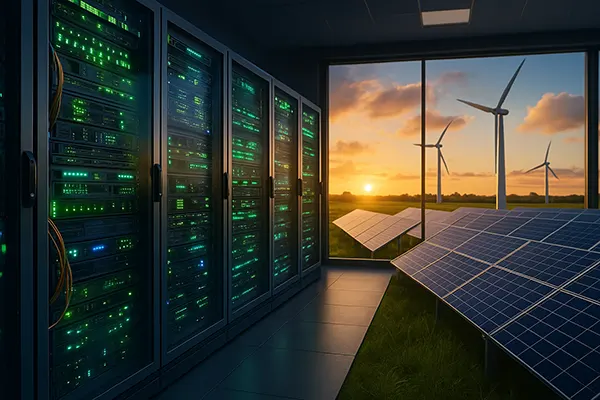
The rapid acceleration of artificial intelligence has created a global infrastructure that operates on enormous volumes of data and computation. By 2025, the energy demand of AI systems has become a critical issue discussed by engineers, policymakers and sustainability experts. Large models require extensive server capacity, complex cooling solutions and continuous hardware upgrades. This article examines the current environmental impact of AI-driven data centres and highlights practical ways to reduce the overall energy footprint while maintaining technological progress.
Rising Electricity Demand in Large-Scale AI Systems
AI models developed in the mid-2020s rely on hundreds of billions of parameters, which require specialised clusters of GPUs and TPUs. Each training cycle may consume millions of kilowatt-hours, surpassing the annual electricity usage of some small towns. As adoption grows across industries, these power requirements will continue increasing unless more efficient approaches are introduced.
Global studies from 2024–2025 show that the energy usage of AI-focused data centres is expanding faster than that of traditional cloud computing. Facilities serving AI workloads often operate near maximum capacity, placing pressure on local grids during peak hours. Because many centres are located in regions with mixed energy generation, carbon intensity remains uneven and in some cases significantly high.
The geographic concentration of AI infrastructure also contributes to environmental risk. Regions that depend heavily on fossil-fuel-based electricity experience higher emissions associated with large-scale model training. Without clear policies and energy diversification, the environmental burden may become more noticeable as demand grows through 2025 and beyond.
Cooling Challenges and Additional Environmental Strain
The thermal output of GPU clusters used for AI training is considerably higher than that of traditional servers. This results in an increased need for cooling systems, which themselves consume significant amounts of electricity. Many facilities still rely on conventional air-based cooling that lacks efficiency when equipment operates under continuous heavy load.
Water usage has become another important factor. Some modern cooling systems rely on evaporative technologies that require large quantities of water, which can strain local resources in dry regions. Tech companies are increasingly under public and regulatory scrutiny regarding water consumption transparency.
To address cooling inefficiencies, several data centres in 2025 are testing immersion cooling and advanced liquids designed for dense AI hardware clusters. These systems reduce electrical demand for cooling and extend hardware lifespan, but require substantial initial investment and specialised maintenance procedures.
Carbon Footprint of AI Growth in 2025
By 2025, carbon accounting frameworks for AI have become more standardised, allowing organisations to analyse the environmental impact of model training and inference. Research institutions now commonly include carbon reporting when publishing AI models, reflecting a shift toward transparency and responsibility within the sector.
However, emissions vary significantly depending on regional electricity sources. AI models trained in areas with predominantly coal-based generation produce far higher carbon outputs than identical models trained in regions powered by renewables. This discrepancy highlights the need for strategic selection of data centre locations to minimise environmental impact.
Companies are increasingly adopting renewable energy purchase agreements to offset emissions. While this improves overall sustainability ratings, it does not automatically eliminate the direct environmental impact during periods when renewable generation is insufficient. As a result, AI-intensive companies continue to face pressure to demonstrate genuine reductions rather than solely relying on certificates.
Lifecycle Emissions Beyond Computation
The environmental impact of AI extends beyond electricity consumption. Manufacturing GPUs and specialised accelerators involves mining rare materials and producing components that require energy-intensive processes. As demand for AI hardware increases, so does the carbon footprint associated with equipment production.
Additional emissions arise from frequent hardware updates, driven by the need for higher performance and more efficient chips. Although the latest processors often reduce electricity usage for specific tasks, the cumulative environmental impact of manufacturing, transport and disposal remains substantial.
Recycling of advanced semiconductor hardware is limited due to the complexity of separating materials. As a result, companies are encouraged to prolong hardware lifecycle where possible and invest in research aimed at improving recoverability of rare metals used in modern AI accelerators.
Energy-Efficient AI: Emerging Solutions and Future Outlook
In 2025, AI developers actively explore methods to reduce the computational burden of model training. Techniques such as parameter-efficient fine-tuning, structured sparsity and quantisation significantly reduce the required hardware resources while maintaining performance for many tasks. These advancements help organisations minimise both energy expenditure and operational costs.
Another emerging trend is training models using renewable-powered clusters that operate flexibly in accordance with grid availability. This allows data centres to perform intensive tasks when renewable output is at its peak while shifting inference workloads to more efficient or lower-demand periods.
Software-level optimisation is equally crucial. Improved compiler toolchains, smarter workload distribution and adaptive scheduling algorithms allow AI systems to complete tasks with fewer redundant computations. In combination with more efficient hardware, these approaches represent a promising path toward long-term environmental sustainability.
Future of Sustainable AI Infrastructure
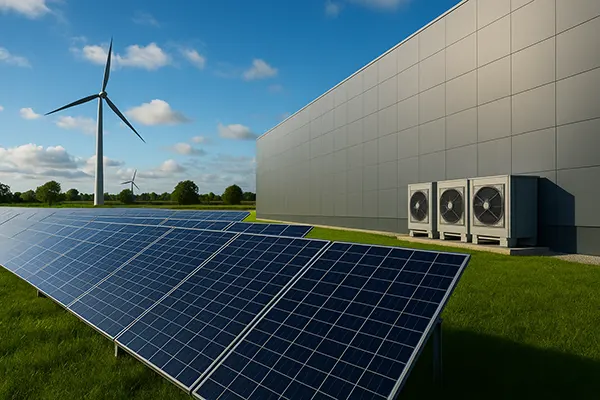
Efforts to build greener AI infrastructures include decentralised training, where tasks are distributed across multiple smaller, energy-efficient nodes. This reduces heat concentration and allows systems to operate closer to renewable energy sources, which decreases dependency on fossil fuels.
Governments are also introducing clearer regulatory frameworks, requiring companies to assess and disclose the environmental footprint of AI operations. These measures promote transparency and help align the sector with global climate objectives.
If progress continues, the future of AI could involve hybrid infrastructures combining energy-aware algorithms, carbon-optimised training schedules and low-emission hardware. Achieving such a system will require collaboration between hardware manufacturers, energy providers and AI developers, ensuring technological advancement without disproportionate environmental cost.