Why Autonomous Sensors Operate for Years Without Battery Replacement
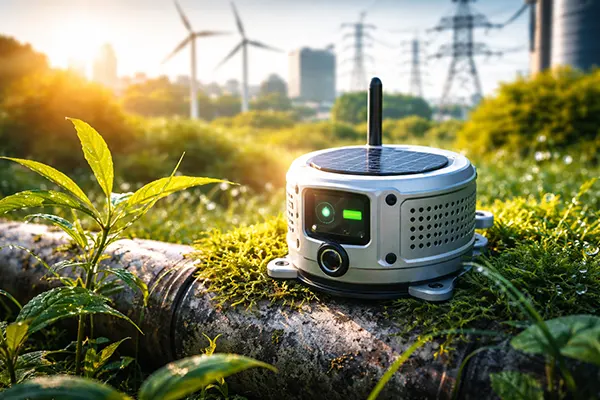
Autonomous sensors are now a critical element in industrial monitoring, smart infrastructure, environmental research and healthcare systems. One of their most notable characteristics is the ability to function for many years without the need to replace or recharge batteries. This capability is not accidental but the result of deliberate engineering decisions, energy management strategies and advances in electronics that prioritise efficiency and reliability.
Ultra-Low Power Electronics as the Foundation
The primary reason autonomous sensors can operate for extended periods lies in the use of ultra-low power electronic components. Modern microcontrollers are specifically designed to consume minimal energy, often operating at microampere or even nanoampere levels during idle states. These chips spend most of their time in deep sleep modes, waking only when data collection or transmission is required.
Sensor elements themselves have also evolved. Temperature, humidity, pressure and motion sensors used today are optimised to deliver accurate readings with negligible power draw. This allows continuous environmental awareness without the constant energy drain that older sensor generations required.
Another critical factor is the integration of system-on-chip architectures. By combining processing, memory and communication functions into a single component, engineers reduce internal power losses and minimise the need for additional circuitry, which directly extends battery lifespan.
Smart Power Management at Firmware Level
Beyond hardware, firmware plays a decisive role in energy efficiency. Autonomous sensors rely on carefully written code that controls when and how each component is activated. Instead of running continuously, the system schedules tasks precisely, ensuring that no component remains powered longer than absolutely necessary.
Interrupt-driven architectures are widely used. The sensor remains dormant until a specific threshold is reached or a timer expires. This approach significantly reduces active operating time and prevents unnecessary energy consumption.
Firmware updates increasingly include adaptive power profiles. These profiles allow sensors to adjust their behaviour based on environmental conditions, data urgency or remaining energy reserves, ensuring optimal performance throughout the device’s operational life.
Energy Harvesting and Environmental Power Sources
Many autonomous sensors no longer rely solely on traditional batteries. Energy harvesting technologies enable devices to draw small amounts of power from their surroundings. Common sources include solar light, vibration, thermal gradients and radio frequency signals.
In outdoor or well-lit environments, miniature photovoltaic cells can provide enough energy to sustain sensor operation indefinitely. Even in low-light conditions, modern solar materials are efficient enough to supplement battery power and slow depletion dramatically.
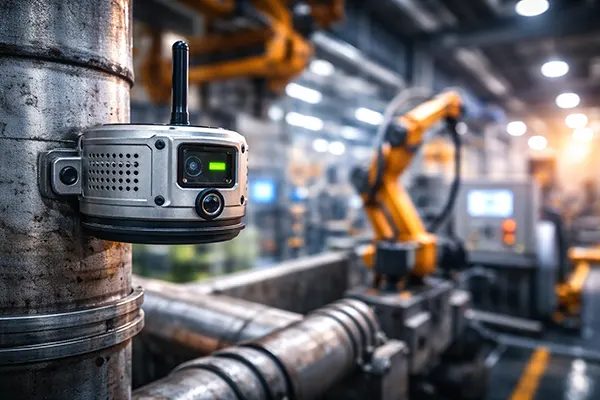
Industrial settings often take advantage of vibration or heat-based harvesting. Machines naturally generate mechanical movement and temperature differences, which can be converted into electrical energy to support sensor operation without external intervention.
Hybrid Energy Storage Strategies
Rather than replacing batteries entirely, many designs use hybrid storage systems. These combine long-life lithium batteries with supercapacitors or rechargeable microcells. The battery provides baseline power, while harvested energy replenishes the secondary storage component.
This approach reduces battery stress by limiting deep discharge cycles, which are a major cause of capacity loss over time. As a result, the primary battery remains functional far longer than in conventional designs.
Hybrid systems also improve reliability. Even if environmental energy sources become temporarily unavailable, stored energy ensures uninterrupted operation, which is essential for critical monitoring applications.
Efficient Communication and Data Transmission
Wireless communication is traditionally one of the most energy-intensive processes in sensor systems. To address this, autonomous sensors employ low-power communication protocols specifically designed for minimal energy usage.
Technologies such as LoRaWAN, NB-IoT and Bluetooth Low Energy allow sensors to transmit small packets of data over long distances using extremely low power. These protocols prioritise efficiency over bandwidth, which suits most monitoring tasks perfectly.
Data is often transmitted in batches rather than continuously. By storing readings locally and sending them at scheduled intervals, sensors significantly reduce the frequency of power-hungry transmission events.
Edge Processing and Data Reduction
Another important factor is edge processing. Instead of sending raw data, sensors increasingly analyse information locally and transmit only meaningful results or alerts. This reduces the amount of data sent and the energy required for communication.
For example, an environmental sensor may record thousands of readings but transmit data only when values exceed predefined thresholds. Normal conditions require no transmission, conserving energy without compromising awareness.
Edge intelligence also reduces network congestion and improves system scalability, making autonomous sensor networks more sustainable and easier to maintain over long periods.