Neuromorphic Processors: Why Future Computers Copy the Way the Brain Works
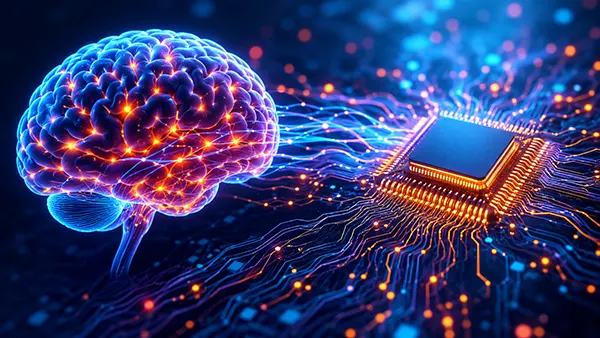
For decades, computer performance improved mainly through faster processors and a growing number of transistors. However, modern computing is approaching practical limits in power consumption, heat generation, and efficiency. At the same time, artificial intelligence applications require enormous computational resources that traditional processor architectures were never designed to handle. This challenge has encouraged researchers to look beyond conventional designs and examine one of the most efficient information-processing systems known to science: the human brain. Neuromorphic processors represent an attempt to reproduce some of the brain’s key operating principles, creating computer systems that can process information more efficiently, learn from experience, and react to changing conditions with significantly lower energy requirements.
Why Traditional Computer Architectures Are Reaching Their Limits
Most modern computers continue to rely on the von Neumann architecture developed in the mid-twentieth century. In this design, memory and processing units are separated, requiring data to move constantly between storage and computation components. While highly effective for many applications, this approach creates a bottleneck that becomes increasingly problematic as workloads grow more complex.
Artificial intelligence systems highlight these limitations particularly well. Training large language models, computer vision systems, and autonomous decision-making software often requires vast data transfers between memory and processors. These operations consume considerable amounts of electricity and generate substantial heat, increasing both operational costs and environmental impact.
The situation becomes even more challenging in edge computing environments, where devices such as autonomous vehicles, robots, wearable electronics, and industrial sensors must process information locally. These systems need rapid decision-making capabilities without relying on large data centres, making energy efficiency a critical requirement. Traditional processors often struggle to balance performance with power consumption in such scenarios.
How the Human Brain Solves Similar Problems
The human brain processes enormous amounts of information while consuming roughly 20 watts of power, similar to a standard household light bulb. Despite this modest energy requirement, the brain can perform tasks involving pattern recognition, sensory interpretation, language understanding, and adaptive learning with remarkable efficiency.
One reason for this efficiency lies in the brain’s distributed structure. Rather than separating memory and processing functions, biological neurons store and process information simultaneously. This arrangement significantly reduces the need for continuous data movement, allowing faster and more efficient computation.
The brain also relies on event-driven communication. Neurons activate only when meaningful signals are received, unlike many digital systems that operate continuously regardless of workload. This selective activity reduces energy consumption and allows resources to be directed towards relevant tasks rather than maintaining constant processing cycles.
What Makes Neuromorphic Processors Different
Neuromorphic processors attempt to reproduce several characteristics of biological neural systems through specialised hardware. Instead of executing instructions sequentially in the manner of conventional CPUs, these processors use networks of artificial neurons and synapses designed to exchange information through events known as spikes.
In a spiking neural network, computation occurs only when significant information is present. This event-based model reduces unnecessary operations and allows the system to react dynamically to changing inputs. As a result, neuromorphic chips can perform certain machine-learning tasks using far less energy than conventional processors or graphics processing units.
Several major technology organisations and research institutions have already developed experimental neuromorphic hardware. Intel’s Loihi series, IBM’s TrueNorth architecture, and various European research projects have demonstrated the potential of brain-inspired computing for pattern recognition, robotics, sensor processing, and autonomous systems. By 2026, these technologies remain largely specialised rather than mainstream, but their capabilities continue to expand.
Current Applications and Real-World Benefits
One of the most promising uses of neuromorphic processors can be found in robotics. Robots operating in unpredictable environments must continuously analyse sensor information while responding rapidly to changing conditions. Neuromorphic systems allow this processing to occur with minimal energy consumption, extending operational time and reducing hardware requirements.
Another important application involves edge artificial intelligence. Smart cameras, wearable medical devices, industrial monitoring systems, and autonomous drones can benefit from local data processing without relying heavily on cloud infrastructure. This reduces latency, improves privacy, and enables faster responses to critical events.
Healthcare research is also exploring neuromorphic technologies. Scientists are investigating whether brain-inspired processors can improve neural interfaces, advanced prosthetics, and medical diagnostic systems. Because these processors naturally handle complex sensory signals, they may provide more efficient ways to interpret biological data and support real-time medical decision-making.

The Future of Brain-Inspired Computing
Although neuromorphic computing remains an emerging field, ongoing research suggests it could become an important component of future computing ecosystems. Rather than replacing traditional processors entirely, neuromorphic chips are likely to complement existing architectures by handling specialised tasks where efficiency, adaptability, and pattern recognition are particularly valuable.
Advances in artificial intelligence continue to increase demand for computing systems capable of processing vast quantities of information without proportional increases in energy consumption. As governments, universities, and technology companies invest in sustainable computing solutions, neuromorphic designs attract growing attention as a potential answer to this challenge.
Future developments may also include closer integration between neuromorphic hardware and conventional AI models. Hybrid systems could combine the precision of traditional computing with the adaptability of brain-inspired architectures, creating new opportunities for autonomous machines, intelligent assistants, and advanced scientific research.
Challenges That Must Be Overcome
Despite considerable progress, several obstacles still limit widespread adoption. Software development for neuromorphic systems remains more complex than programming traditional hardware. Many existing applications and machine-learning frameworks were designed specifically for conventional processors, requiring significant adaptation before they can operate efficiently on neuromorphic platforms.
Hardware scalability presents another challenge. Researchers continue to explore methods for increasing the number of artificial neurons and synapses while maintaining reliability, manufacturability, and cost-effectiveness. Achieving large-scale deployment will require improvements in both chip design and production techniques.
Even with these challenges, the long-term potential remains substantial. As computing demands continue to grow and energy efficiency becomes increasingly important, neuromorphic processors offer a fundamentally different approach inspired by billions of years of biological evolution. Their development demonstrates how lessons from neuroscience may influence the next generation of intelligent technologies and reshape the future of computing.