WebGPU and WebAssembly in Browser Casino Games: Running 3D Slots Without an App
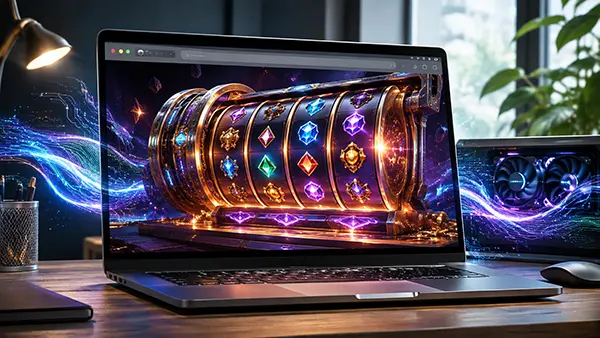
Browser casino games are no longer restricted to flat reels and simple animations. In 2026, WebGPU and WebAssembly can deliver detailed 3D scenes, smoother effects and faster game logic directly in a modern browser, without requiring a separate desktop or mobile programme.
Why WebGPU Changes Browser Slot Design
WebGPU gives a website efficient access to the device’s graphics processor. Compared with WebGL, it is better suited to modern rendering, helping developers create detailed lighting, particles, animated backgrounds and complex reel transitions with less pressure on JavaScript.
The sign-up page of NolimitWay is a clear example of a casino service reached through a browser rather than installed desktop software. The wider trend is to keep access simple while transferring demanding visual work to the player’s GPU.
Not every device will display identical graphics. A powerful computer may show sharper textures and more effects, while an older phone receives lower detail and fewer particles. Automatic quality settings help the same game remain stable across varied hardware.
Where WebAssembly Fits Into the Game
WebAssembly runs calculation-heavy code in a compact format at near-native speed. It can support physics, animation systems, symbol movement and sound timing, which may become inefficient when a large 3D game depends entirely on JavaScript.
Studios can reuse parts of engines written in C++, C# or Rust instead of rebuilding every system for the web. JavaScript can manage menus and page interaction, while WebAssembly handles tasks that benefit from fast, predictable execution.
Visual effects and game outcomes must remain separate. WebGPU may render a dramatic win sequence, but it does not decide the result. Random-number processes, transaction records and account controls require independent security, testing and regulatory checks.

How a 3D Slot Loads Without Installed Software
A browser does not need the complete game before play begins. The interface, rules and first visual assets can load initially, while extra textures, audio and animations arrive when required. Caching reduces repeated downloads during later sessions.
WebAssembly modules can compile while files are being transferred, and WebGPU prepares graphics work for the device. Much of this happens in parallel behind a loading screen. Compression and efficient content delivery still determine how quickly play can begin.
WebGPU requires HTTPS, while studios must also control memory, battery use and interrupted connections. A visually advanced slot that overheats a phone or consumes excessive mobile data is poorly optimised, whatever technology supports it.
Browser Support and Practical Limits in 2026
WebGPU works in current Chrome releases, Safari 26 and Firefox 141 on supported systems. Coverage still depends on the operating system, graphics driver and hardware, so it cannot yet replace WebGL for every player.
Production games therefore need feature detection. A studio can use WebGPU first, fall back to WebGL when necessary and reduce visual quality on weaker devices. The priority should be a stable session rather than maximum detail at any cost.
WebGPU and WebAssembly make browser delivery more capable, but they do not replace testing, accessibility, fast loading or secure account handling. Their practical value is allowing sophisticated 3D slots to open through a link and adapt to the device being used.